Stainless steel 316 control cabinet corrosion class C5
- Maximum corrosion resistance
- Durable outdoor use
- Suitable for heavy industry
Robust stainless steel 316 switchgear cabinets for corrosion class C5
A stainless steel 316 control cabinet corrosion class C5 is designed for environments with heavy corrosive loads such as salt air, chemical vapors and intensive outdoor use. This type of cabinet offers high resistance to influences that standard steel or stainless steel 304 cannot handle. Combining stainless steel 316 with proper cabinet construction, correct sealing and appropriate IP value keeps the controller functioning reliably in critical outdoor applications. For industries such as marine, petrochemical and water management, this material is the standard to ensure long-term protection of electronics.

Paneelbouw Pioniers voor Machinebouw
Met de precisie van een horlogemaker en de souplesse van een acrobaat, zet Gerbin Control zich in voor het creëren van maatwerk elektrotechnische panelen voor de machinebouw. Als veerkrachtige speler in de paneelbouw, schakelen we snel, zonder in te boeten op kwaliteit of duurzaamheid. Stap in onze wereld van innovatie en ontdek hoe we uw machinebouw-projecten naar een hoger niveau kunnen tillen.
OPEN CALCULATIE
Krijg duidelijkheid in kosten en flexibiliteit in uitvoering
OFFERTE IN 5 DAGEN
Wij begrijpen de urgentie van uw projecten
VERDUURZAMING
Toegewijd aan een duurzamere toekomst
UL/CSA
UL / CSA certificering voor uw panelen in huis.
What are stainless steel 316 switchgear cabinets for corrosion class C5
A stainless steel 316 control cabinet corrosion class C5 is specifically designed for environments with high corrosion pressures. Stainless steel 316 contains molybdenum, which significantly increases its resistance to chlorides, salty air and aggressive industrial fumes. Combined with sturdy construction, the correct IP rating and high-quality seals, a stainless steel 316 switchgear cabinet provides long-term protection of electronics and control components. This makes the material suitable for long-term outdoor applications and industries where rust and deterioration are a major risk. The enclosure prevents moisture, dirt and chemicals from gaining access to the control cabinet.
Important standards and guidelines
NEN-EN 61439
This standard focuses on the construction, safety and reliability of distribution devices. It is also the basis for correct cabinet layout, mechanical strength and thermal control for a stainless steel 316 switchgear cabinet. It determines how the cabinet should be designed to operate safely and continuously in corrosive environments.
NEN EN 60204 1
NEN EN 60204 1 is applicable to electrical equipment of machinery and covers topics such as grounding, cabling and protection. When a stainless steel 316 cabinet is used as a machine panel, this standard provides an important framework for safe electrical implementation.
NEN 1010
This standard for low-voltage installations provides requirements for safe installation, grounding and protection. In outdoor applications, these regulations are essential for safe and fault-free switchgear connection.
ATEX compliant ATEX 114
If the stainless steel 316 switchgear is used in hazardous areas, the design must conform to ATEX 114. This may be applicable in petrochemical plants or environments with gas or dust. The corrosion-resistant enclosure protects the equipment but is matched to the requirements of the zone.
CONTACT US
Applications in industry
Stainless steel 316 switchgear is found in industries where corrosive conditions are the norm. In marine and offshore, they provide protection from salt water and sea winds. In water management, they protect equipment from moisture, mud and chemicals. In petrochemical environments, they provide resistance to vapors and splashes. RVS 316 is also used in food, climate control installations and outdoor applications such as bridges, locks or urban installations to ensure long-term resistance.
Advantages of stainless steel 316 switchgear cabinets for corrosion class C5
The advantages of a stainless steel 316 switchgear cabinet are obvious. The material has high resistance to rust, chloride and chemical attack. The cabinet has a long service life and requires little maintenance. Electronics are better protected from moisture and dirt, ensuring stable operation. Some advantages include:
- Suitable for aggressive environments
- Long lifespan
- Reliable protection of PLCs and cabling
- Less maintenance due to high corrosion resistance
The process from design to commissioning
The process begins with selecting the right stainless steel 316 enclosure appropriate for corrosion class C5. Engineers then determine cabinet layout and choose components that can withstand the environment. Drawing in EPLAN P8 helps to clearly work out cabinet layout, thermal control and cable routes. IP values and any ventilation or heating are matched to the outdoor application.
During panel construction, components are carefully mounted and wired according to NEN EN 61439 and NEN EN 60204 1. Second points of attention are sealing, mounting plates, pressure compensators and corrosion-resistant mounting materials. During the FAT, functions, insulation and cabinet construction are tested. In the SAT phase and commissioning, the cabinet is checked in the actual environment and delivered with test report and declaration of conformity.

Years of experience in the field of industrial automation
Efficiency and reliability in industrial automation
With Gerbin Control as your partner, you benefit from several specific advantages. We strive for reduced Total Cost of Ownership (TCO) and offer electrical components that meet the highest standards. In addition, we combine flexibility with competitive pricing, increase the efficiency of your systems and machines, and have an international network and UL/CSA certification.
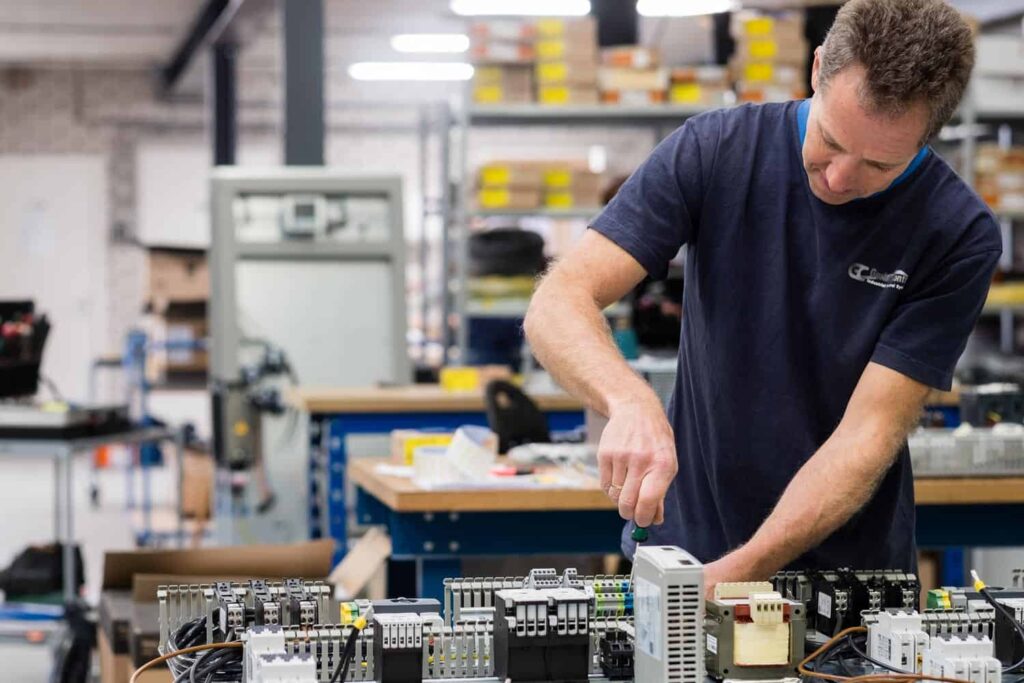
Gerbin Control as your partner for stainless steel 316 switchgear cabinets
Gerbin Control supports companies in the design and construction of durable stainless steel 316 switchgear suitable for corrosion class C5. Thanks to our expertise in panel construction, hardware engineering and execution according to NEN EN 61439, we deliver reliable solutions for sectors such as marine, water management, petrochemicals and food. For international projects, we can build panels according to UL 508A and provide them with a test report and declaration of conformity. This ensures you have a control cabinet that can withstand harsh conditions. Would you like advice or to discuss a project? Contact us for a technically sound proposal.
Frequently asked questions about Stainless steel 316 control cabinet corrosion class C5
What is corrosion class C5
Corrosion class C5 is a classification from ISO 12944 that indicates that an environment has a very high risk of corrosion. This refers to environments with salt, chemicals, high humidity or heavy industrial loads. For switchgear cabinets, this means that standard materials corrode faster. Stainless steel 316 is a logical choice in this class because it is more resistant to chloride and aggressive substances than stainless steel 304. This keeps the controls protected and functioning reliably longer.
When to choose stainless steel 316 instead of stainless 304
Stainless steel 316 is chosen when the cabinet is exposed to chloride, salt air, cleaning agents, chemicals or continuous moisture. Stainless 304 can show pitting corrosion or surface deterioration more quickly in these conditions. In industries such as marine, food, petrochemical and water management, stainless steel 316 is usually the standard because of its better resistance. In lighter indoor applications, RVS 304 may be sufficient, but in outdoor applications or corrosion class C5, RVS 316 offers distinct advantages.
Which environments fall under corrosion class C5
Corrosion class C5 includes harsh conditions such as coastal areas, offshore installations, chemical plants, sewage pumping stations, water treatment plants and industrial zones with high pollution. Urban areas with heavy traffic or high air pollution can also fall within this class. These environments require a material that is resistant to long-term degradation. Stainless steel 316 combined with the proper finish and sealing provides excellent protection.
How is a stainless steel 316 switchgear cabinet tested for corrosion resistance
A stainless steel 316 control cabinet is tested for functionality, construction and protection against ingress. During the FAT, the electrical functions, assembly quality and IP value are checked. Corrosion resistance is assessed primarily based on material selection, surface treatment and sealing. In the SAT, the cabinet is inspected in the actual environment to verify that moisture, salt or chemicals do not affect operation or construction.
Is a stainless steel 316 switchgear cabinet suitable for ATEX environments
Stainless steel 316 can be used in ATEX environments when the cabinet conforms to ATEX 114. The corrosion resistance of the material is an advantage here, especially in gas or dust environments where moisture and chemicals may be present. The explosion-proof design depends on the zone and application requirements. During engineering, cabinet layout, grounding and feedthroughs are matched to the ATEX guidelines and the environment.
