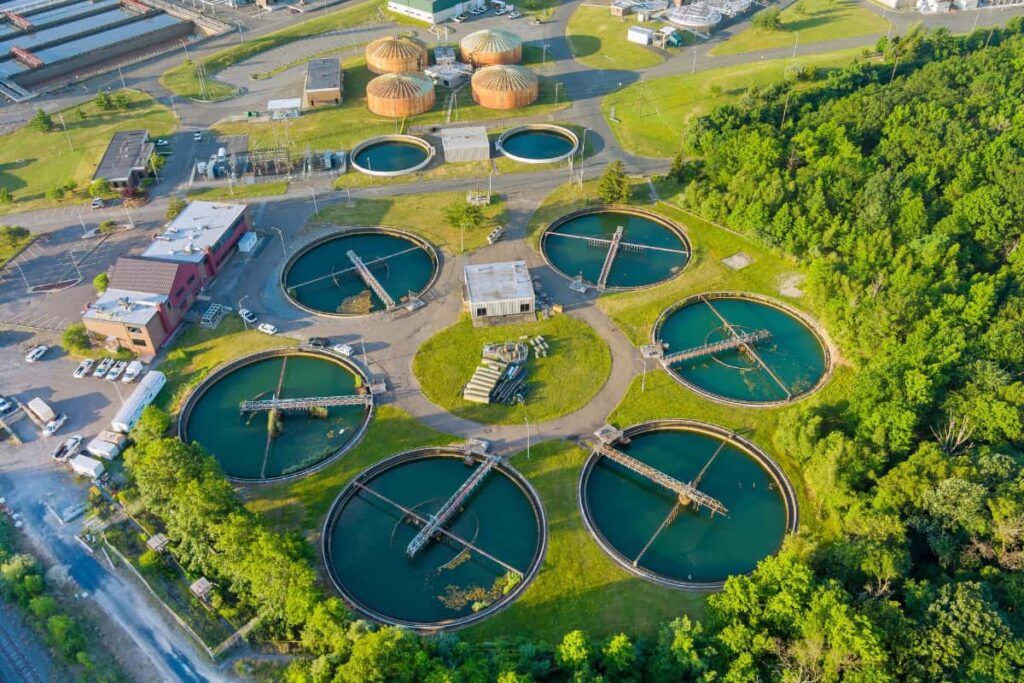
PLC control for water treatment plants
- Reliable process control
- Industrial standards
- Scalable design
PLC control as backbone of water treatment processes
A PLC control for water treatment plants forms the heart of modern process automation within water management. With a well-designed PLC solution, treatment processes are reliably controlled, monitored and optimized. Think of controlling pumps, valves and dosing systems, but also continuous monitoring and alarms. Within PLC control for water treatment everything revolves around stability, reproducibility and insight into the process. Smart water management automation creates more grip on quality, energy consumption and operational reliability, both in drinking water production and wastewater treatment.
Paneelbouw Pioniers voor Machinebouw
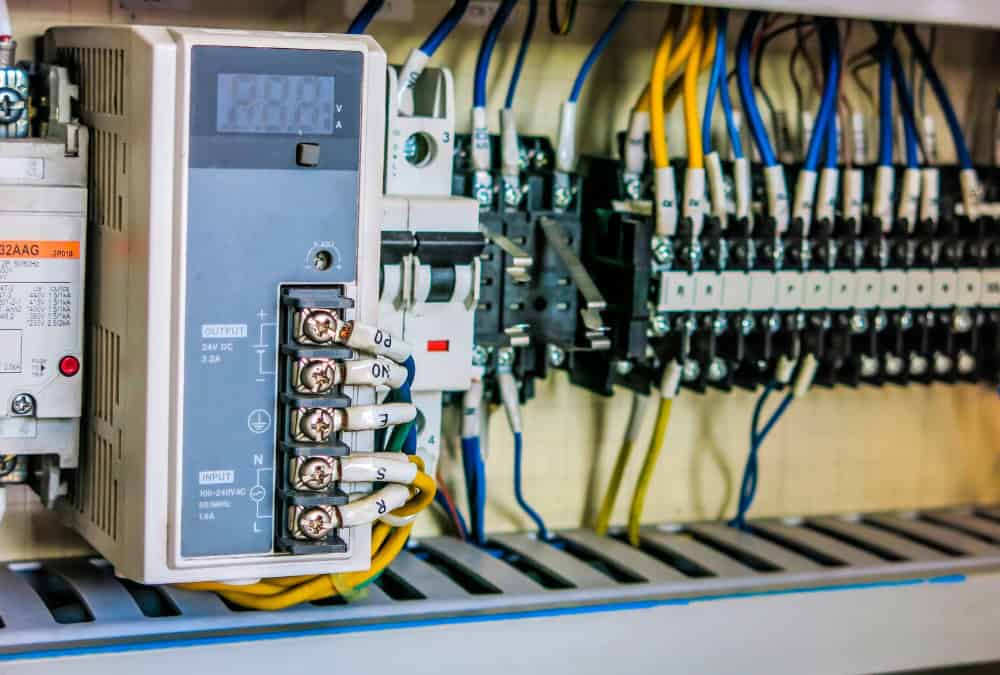
Met de precisie van een horlogemaker en de souplesse van een acrobaat, zet Gerbin Control zich in voor het creëren van maatwerk elektrotechnische panelen voor de machinebouw. Als veerkrachtige speler in de paneelbouw, schakelen we snel, zonder in te boeten op kwaliteit of duurzaamheid. Stap in onze wereld van innovatie en ontdek hoe we uw machinebouw-projecten naar een hoger niveau kunnen tillen.
OPEN CALCULATIE
Krijg duidelijkheid in kosten en flexibiliteit in uitvoering
OFFERTE IN 5 DAGEN
Wij begrijpen de urgentie van uw projecten
VERDUURZAMING
Toegewijd aan een duurzamere toekomst
UL/CSA
UL / CSA certificering voor uw panelen in huis.
What is PLC control for water treatment plants
PLC control for water treatment plants is aimed at automatically controlling and monitoring processes within water management. A PLC collects signals from sensors such as level measurements, flows and pressure sensors and, based on these signals, controls actuators such as pumps, valves and dosing systems. Within PLC water treatment, the focus is on continuity, accurate control and clear process information.
Process PLC control is often combined with HMI or SCADA so that operators have real-time visibility into the plant and can easily intervene when needed.
Important standards and guidelines
NEN-EN 60204-1
This standard describes requirements for the electrical equipment of machinery. For control panels in water treatment plants, it provides the basis for safe design, assembly and testing of PLC controls.
NEN 1010
NEN 1010 applies to low-voltage installations and guarantees a safe electrical installation. This standard also plays an important role in water management automation, for example in power supplies and field cabling.
Machine safety and PL/SIL
Where functions are safety-critical, PL or SIL methodology is used in accordance with EN ISO 13849-1 and EN/IEC 62061. This involves a structured approach to risk analysis and functional safety, not certification of the system or organization.
CONTACT US
Applications within water management
PLC control is used in a variety of water treatment plant components, such as:
- WWTPs and drinking water treatment plants.
- Pumping stations and pumping stations
- Dosing and mixing plants
- Filtration and aeration processes
The systems are designed for industrial environments and are often housed in control cabinets with appropriate IP ratings, for example IP54 or IP65 depending on the mounting location.
Technical characteristics of process PLC control
A PLC solution for water treatment usually consists of a modular structure with central or decentralized I/O. Industrial communication protocols such as Profinet, Modbus TCP or OPC UA ensure reliable data exchange between components and higher-level systems.
Engineering and documentation are performed in tools such as EPLAN, which ensures overview, maintainability and reproducibility. During the process, FAT and SAT are fixed steps to verify functionality and safety before and after installation.
Advantages of PLC control for water treatment
Applying PLC water treatment offers several advantages:
- Constant and precise process control
- Better process insight through monitoring and logging
- Higher operating reliability and less downtime
- Flexibility for expansions or process changes
These advantages make PLC control an indispensable part of modern water treatment plants.
From design to commissioning
The process starts with the functional and technical design of the controller. This is followed by panel construction, software development and integration of hardware and field components. Before delivery, the installation is tested via FAT and SAT, after which the PLC control system is commissioned and handed over to the user. This creates a controlled and transparent process from start to finish.
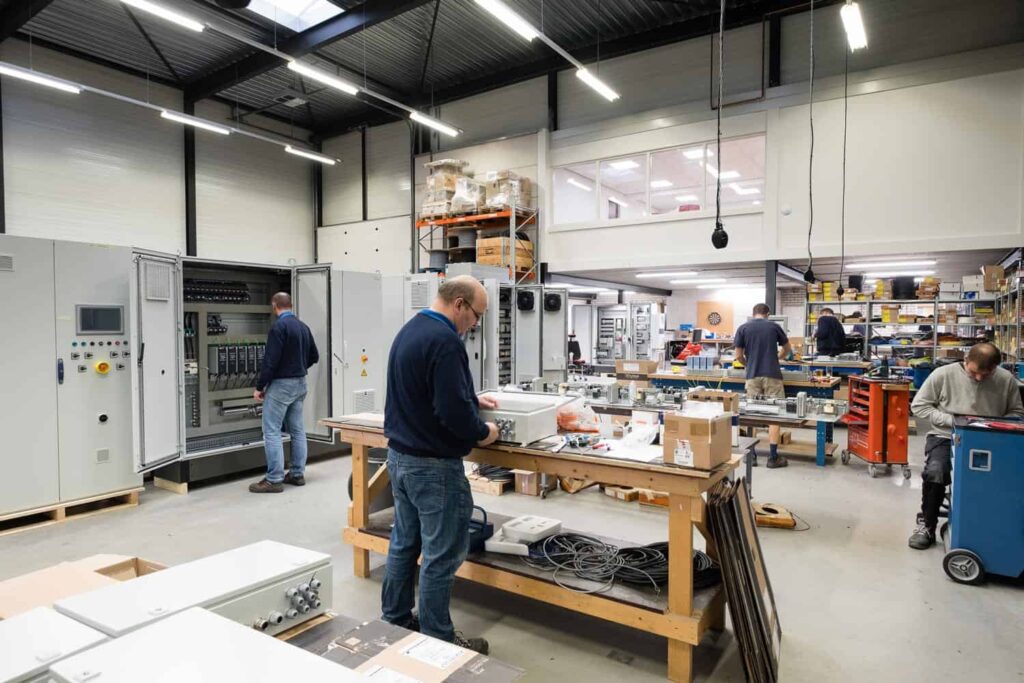
Years of experience in the field of industrial automation
Efficiency and reliability in industrial automation
With Gerbin Control as your partner, you benefit from several specific advantages. We strive for reduced Total Cost of Ownership (TCO) and offer electrical components that meet the highest standards. In addition, we combine flexibility with competitive pricing, increase the efficiency of your systems and machines, and have an international network and UL/CSA certification.
Gerbin Control as partner for PLC control in water treatment
Gerbin Control supports organizations in water management and infra with reliable PLC control for water treatment plants. From their expertise in panel building, hardware and software engineering they realize control solutions that meet the requirements of industrial environments. Control panels are designed and built in accordance with NEN-EN 61439 and NEN-EN 60204-1, with attention to overview, maintenance and safety. As a UL Listed Panel Shop, Gerbin Control can also supply panels according to UL 508A for international projects. Experience in sectors such as infrastructure and water management makes Gerbin Control a substantive and technically strong partner, from design to commissioning.
Want to know what this means for your installation? Contact us for advice or a technical exploration.
Frequently asked questions about PLC control for water treatment
What functions does a PLC controller have in water treatment?
A PLC controller controls and monitors the main processes within a water treatment plant. Think of controlling pumps, valves and dosing systems based on measurements such as level, flow and pressure. In addition, the PLC processes alarms, trends and process data. In combination with HMI or SCADA, an overview and control of the entire purification process is created, which contributes to stability and operational reliability.
What is the difference between PLC control and SCADA in water management?
A PLC is responsible for direct control of the process and responds in real-time to signals from the field. SCADA focuses on higher-level visualization, monitoring and reporting. Within water management automation, PLC and SCADA work together. The PLC controls the process, while SCADA provides insight into performance, failures and trends.
What standards apply to PLC control in water treatment plants?
For PLC control in water treatment, NEN-EN 60204-1 and NEN 1010, among others, are relevant for electrical safety. If safety functions are present, work is done according to PL or SIL methodology in accordance with EN ISO 13849-1 and EN/IEC 62061. Systems are designed in accordance with these standards without claiming certifications that are not applicable.
When is PLC control needed in water management?
PLC control is needed as soon as processes need to be controlled automatically, reliably and continuously. This applies, for example, to pumping stations, WWTPs and drinking water plants. Even with more complex controls or when multiple plants are linked, PLC water treatment offers the necessary flexibility and scalability.
What is the process of testing a PLC controller?
Testing a PLC controller is done in several steps. During the FAT, functionality is checked before the installation arrives on site. After installation follows the SAT, during which operation is tested in practice. This approach reduces risk and ensures controlled commissioning.
